High Vacuum Pumps
High vacuum pumps are used when the final absolute pressure required is very low.
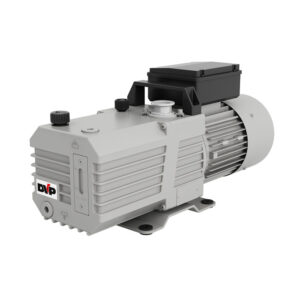
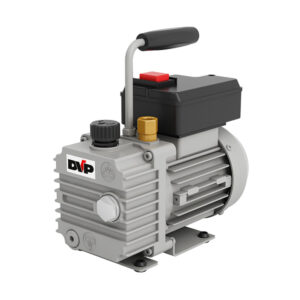

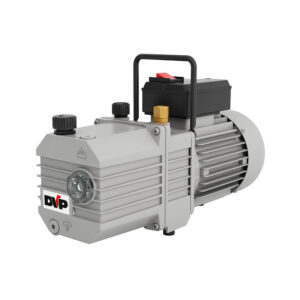
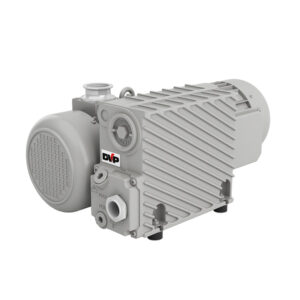
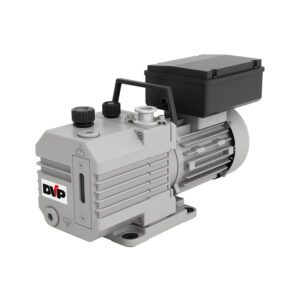
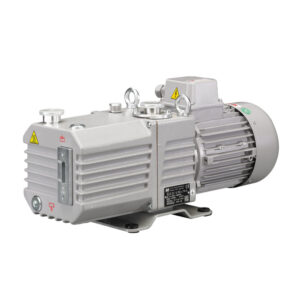

Manufactured in Italy
DVP high vacuum pumps are designed and manufactured in Italy to established European engineering standards, providing a proven alternative to lower-cost imported pumps of uncertain origin and support.

UK & Ireland Master Agent
Vacuum Pumps UK is the official DVP Technology Master Agent for the UK and Ireland, providing genuine DVP vacuum pumps, spare parts, technical support and after-sales service.
Laboratory & Research Vacuum
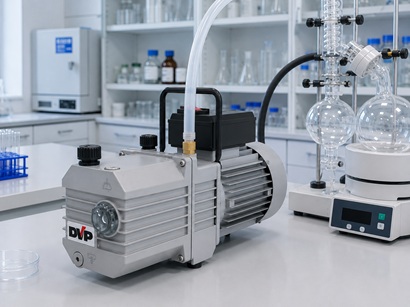
DVP high vacuum pumps are designed for laboratories, universities, research institutes and scientific equipment requiring dependable deep-vacuum performance down to 0.005 mbar absolute.

UK Master Agent Support
Vacuum Pumps UK is the DVP Technology Master Agent for the UK and Ireland, supplying genuine pumps, SW vacuum oils, spare parts, technical advice and after-sales support.
Speak to a High Vacuum Pump Specialist
Unsure which high vacuum pump is right for your laboratory, analytical instrument or backing-pump duty? Vacuum Pumps UK can advise on pumping speed, ultimate pressure, chamber volume, pump-down time, gas ballast requirements and the most suitable DVP model.
Contact Our SpecialistsWhat Is a High Vacuum Pump?
A high vacuum pump is designed to achieve substantially lower absolute pressure than a standard industrial vacuum pump. DVP high vacuum pumps use oil-lubricated rotary vane technology and are selected where stable low pressure, low vibration and dependable operation are required.
The oil inside the pump lubricates the mechanism, seals internal clearances and transfers heat. In double-stage models, two pumping sections operate in series so that the second stage further reduces the pressure produced by the first.
These pumps are widely used in laboratories, research equipment, analytical instruments and as backing pumps for turbomolecular, diffusion and other high-vacuum systems.
How High Vacuum Rotary Vane Pumps Work
An eccentrically mounted rotor turns inside a cylindrical pumping chamber. Sliding vanes maintain contact with the chamber wall and divide the internal volume into expanding and contracting sections.
As the rotor turns, gas is drawn through the inlet into an expanding chamber. Continued rotation traps and compresses the gas before it is discharged through the exhaust.
The pump oil seals the small clearances between the vanes, rotor and chamber, allowing much lower pressures to be achieved than with dry-running rotary vane pumps.
High vacuum models should normally evacuate closed systems and should not be left running for extended periods with the inlet open to atmosphere unless the specific model and duty allow it.
Single-Stage vs Double-Stage High Vacuum Pumps
Single-Stage Pumps
Single-stage pumps use one rotary vane pumping section. They provide strong pumping speed across a broad pressure range and are suitable for general laboratory vacuum, vacuum casting, filtration and processes where extremely low pressure is not required.
Typical DVP examples include RC-series single-stage models such as the RC4M, RC8M and RC50M.
Double-Stage Pumps
Double-stage pumps use two pumping sections connected in series. The second stage compresses the gas discharged by the first, allowing the pump to reach much lower ultimate pressures.
These pumps are often selected for analytical instruments, leak detection, mass spectrometry, freeze drying and high-vacuum backing duties.
Typical High Vacuum Pump Applications
DVP high vacuum pumps are used in scientific, laboratory and industrial processes where stable low pressure is essential.
• Research laboratories and universities
• Mass spectrometers
• Chromatography equipment
• Helium leak detectors
• Laboratory freeze dryers
• Microscopy systems
• Vacuum ovens and drying systems
• Vacuum distillation
• Laboratory autoclaves
• Metallurgy and metallisation
• Semiconductor processes
• Space simulation chambers
• Precious metal vacuum casting
• Turbomolecular pump backing
• Diffusion pump backing
High Vacuum Backing Pumps
Many high-vacuum technologies cannot exhaust directly to atmospheric pressure. A backing pump first evacuates the chamber and then maintains the foreline pressure required for the connected high-vacuum pump to operate correctly.
DVP double-stage rotary vane pumps are commonly considered for backing turbomolecular pumps, diffusion pumps and other ultra-high-vacuum systems.
The correct backing pump depends on the connected pump's gas throughput, maximum foreline pressure, chamber size, process gas and required pump-down time.
What Does the Gas Ballast Do?
The gas ballast admits a controlled quantity of air during the compression stage. This helps reduce condensation of moderate quantities of water vapour or process vapour within the pump oil and internal mechanism.
Gas ballast operation can be useful during freeze drying, vacuum distillation and laboratory drying processes.
Opening the gas ballast normally increases the achievable final pressure, so it should be closed when the deepest vacuum is required.
Required Ultimate Pressure
Confirm the lowest operating pressure required. A single-stage pump may be suitable for general laboratory vacuum, while a double-stage model is needed for deeper vacuum.
Chamber Size & Pump-Down Time
Larger chambers and faster evacuation requirements need greater pumping capacity. Pipework restrictions can also reduce the effective pumping speed.
Gas & Vapour Load
Moisture, solvents and process vapours affect oil life and pump performance. Gas ballast, filtration or cold trapping may be required.
Why DVP High Vacuum Pumps?
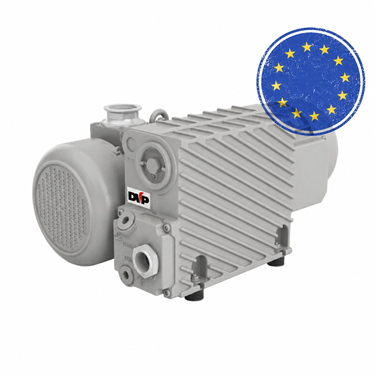
DVP high vacuum pumps combine Italian manufacture, compact construction, reliable coupling drives and strong laboratory performance.
The range includes single-stage, double-stage and specialist models for a wide variety of scientific and industrial duties.
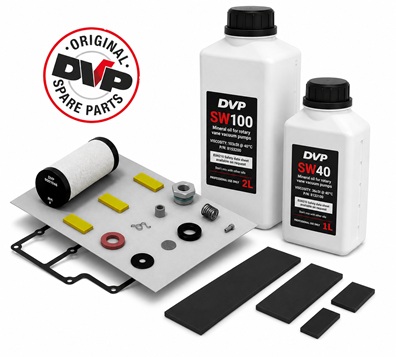
Oil, Parts & Accessories
Vacuum Pumps UK supplies genuine DVP SW vacuum oils, service kits, filters, seals, gaskets, valves and replacement components to keep your vacuum pump operating at peak performance.
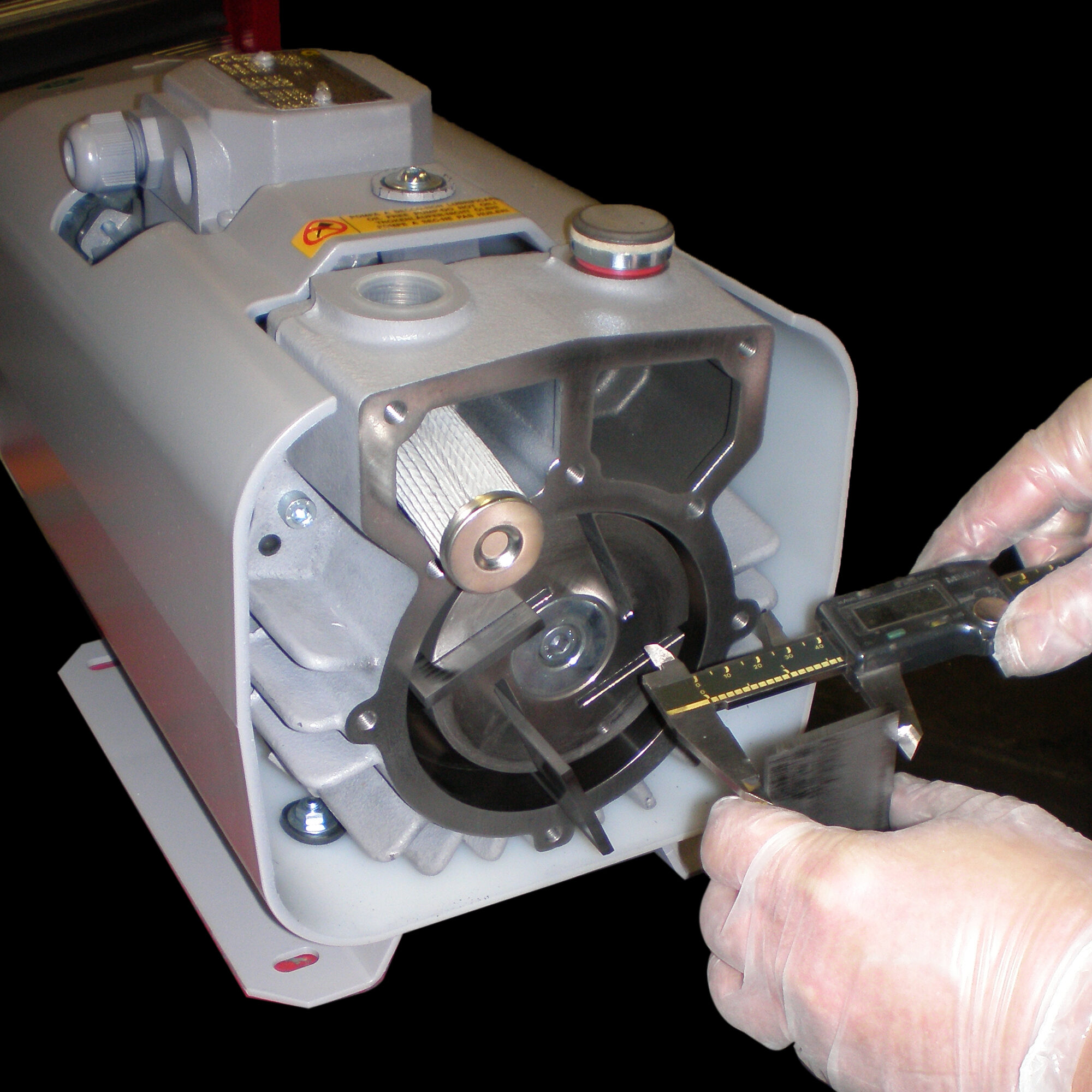
Service & Repairs
Vacuum Pumps UK provides technical support, while servicing, overhaul and repairs are carried out by our sister company, VacAir Superstore. Our factory-trained engineers repair DVP and many other leading vacuum pump brands.
Installation and Maintenance
High vacuum pumps should be installed on a stable surface with adequate cooling airflow and access for oil checks and servicing.
Vacuum pipework should be kept short and unrestricted. Long hoses, narrow tubing, contaminated filters and restrictive fittings can significantly reduce the pumping speed available at the chamber.
Oil condition is critical. Contaminated, oxidised or vapour-loaded oil can reduce pumping performance and prevent the pump reaching its expected ultimate pressure.
Maintenance intervals depend on running hours, operating pressure, process cleanliness and vapour exposure.
Frequently Asked Questions
What is a high vacuum pump?
A high vacuum pump is designed to achieve much lower absolute pressure than a standard industrial vacuum pump. DVP high vacuum models use oil-lubricated rotary vane technology.
What is the difference between single-stage and double-stage pumps?
A single-stage pump uses one pumping section. A double-stage pump uses two sections in series and can normally achieve a much lower ultimate pressure.
How low can DVP high vacuum pumps go?
Selected DVP double-stage pumps have a stated ultimate pressure of 0.005 mbar absolute.
What is a backing pump?
A backing pump reduces the system pressure and maintains the foreline pressure needed by a turbomolecular, diffusion or other high-vacuum pump.
Why do high vacuum pumps use oil?
The oil lubricates the mechanism, seals internal clearances and transfers heat, helping the pump achieve deep vacuum.
Can high vacuum pumps run continuously?
Many models can operate continuously when correctly sized and connected to a suitable closed system, but they should not normally run for long periods with the inlet open to atmosphere.
What does the gas ballast do?
The gas ballast helps reduce condensation of moderate quantities of water vapour or process vapour inside the pump.
Which high vacuum pump is right for my laboratory?
The correct pump depends on the required ultimate pressure, chamber size, pump-down time, gas load, vapour exposure and whether the pump will be used directly or as a backing pump.
Need Help With a High Vacuum Pump?
Speak to our vacuum pump experts for advice on selecting a laboratory high vacuum pump, backing pump, replacement pump, genuine spare parts, servicing or breakdown support.