Vacuum Lifting & Handling Applications
Vacuum Pumps for Lifting, Handling & Pick-and-Place Systems
Vacuum lifting systems use suction cups, lifting pads, vacuum plates or gripping frames to hold and move products safely without conventional mechanical clamps.
Vacuum Pumps UK supplies vacuum pumps and blowers for lifting glass, sheet metal, timber panels, mdf and wood, plastics, cartons, bags, food products and components, as well as high-speed robotic pick-and-place and automated materials-handling systems.
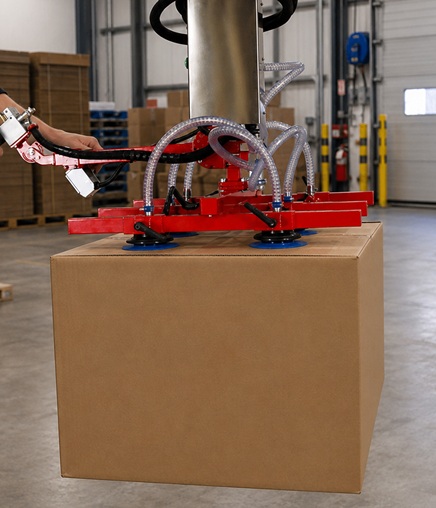
Reliable Vacuum for Safe and Efficient Material Handling
Vacuum lifting works by creating a pressure difference between the atmosphere and the sealed area beneath a suction cup or lifting pad. This pressure difference generates the holding force needed to grip, lift, position or transport the load.
The correct vacuum source depends on more than the weight of the product. Surface condition, porosity, leakage, suction-cup area, lift orientation, acceleration, cycle time, pipework volume, operating height and the required safety factor must all be considered.
As the Official DVP Technology Master Agent for the UK and Ireland, Vacuum Pumps UK supplies new pumps, genuine spare parts, servicing and replacement vacuum solutions for manual lifters, automated handling systems, robots, production machinery and central vacuum installations.
Vacuum Lifting and Handling Applications
Glass and Glazing
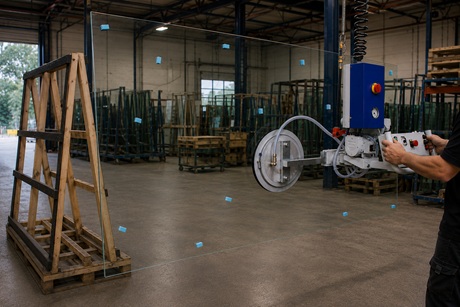
Vacuum lifting frames allow large glass sheets, windows and glazed units to be moved, rotated and installed with controlled support.
Sheet Metal and Fabrication
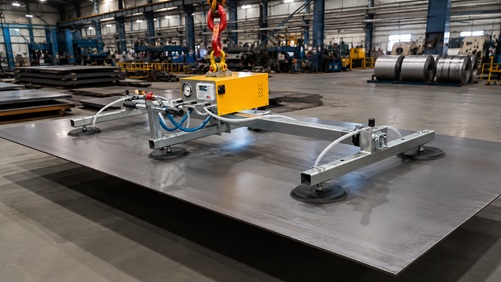
Steel, aluminium and other non-ferrous sheets can be loaded into cutting, forming and fabrication machinery without edge clamps.
Timber, Boards and Panels
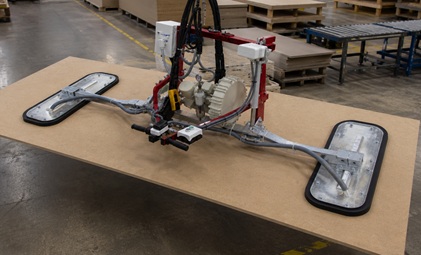
Vacuum lifters and handling robots move MDF, plywood, laminates, doors, worktops and furniture components through production.
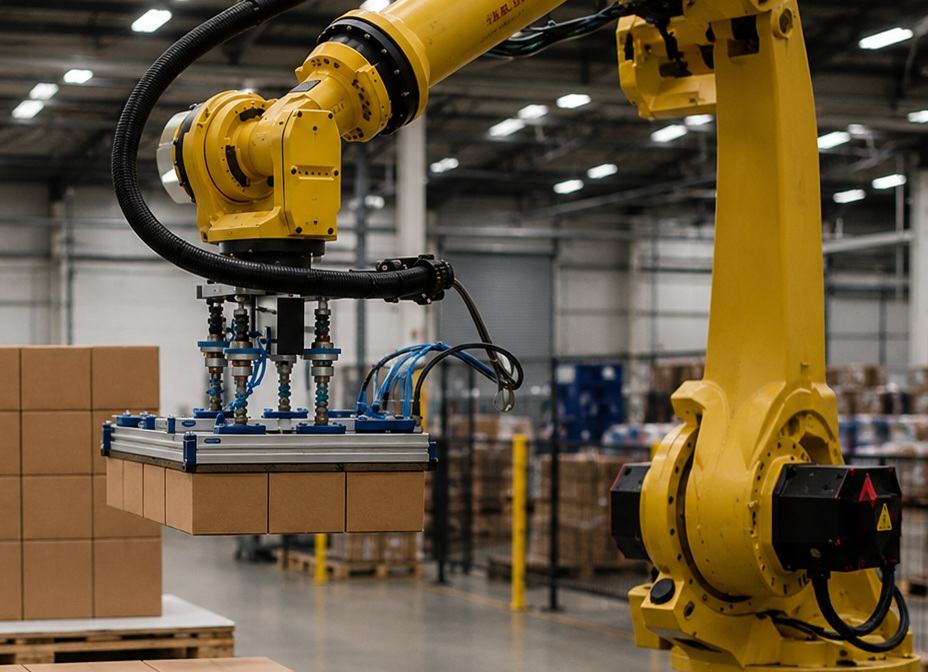
Robotic Pick-and-Place
Fast-response vacuum supports automated gripping, transfer, sorting, assembly, machine loading and palletising.
Packaging and Carton Handling
Suction cups separate carton blanks, erect boxes, transfer packs and position products throughout packaging machinery.
Bags, Sacks and Flexible Packs
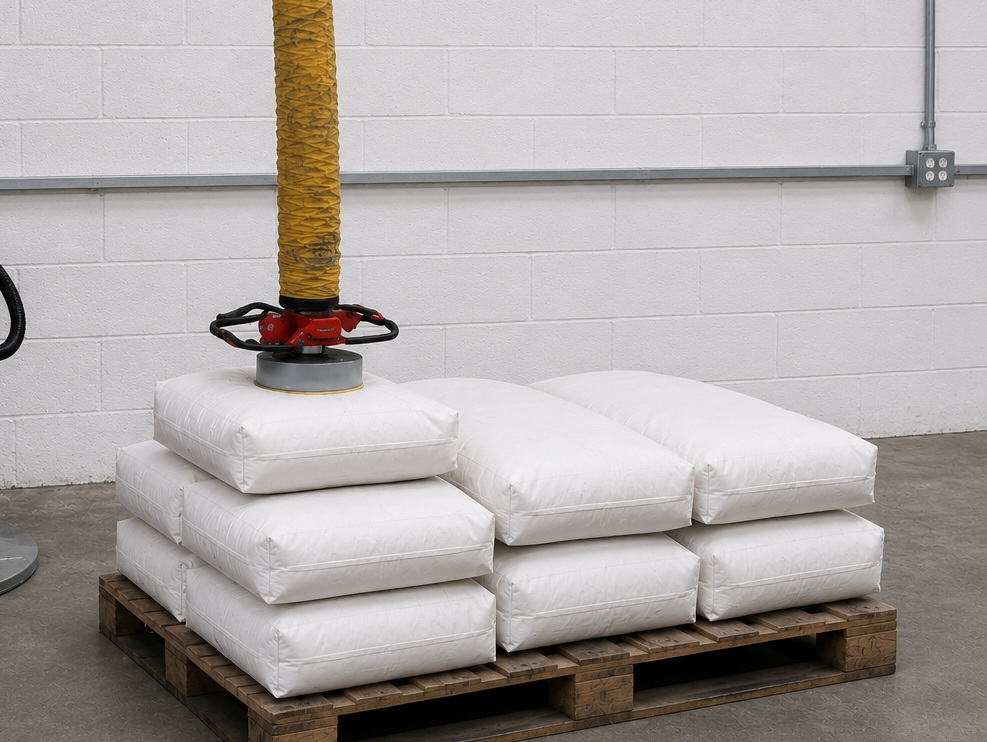
High-flow vacuum systems can grip sacks, pouches and flexible products despite changing shape and unavoidable leakage.
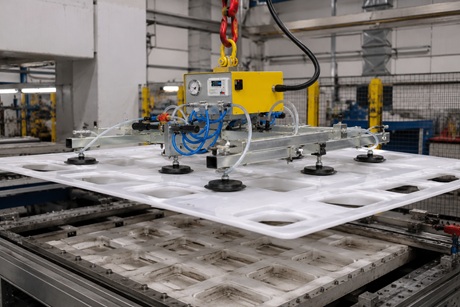
Plastics and Moulded Components
Vacuum grippers remove mouldings, handle plastic sheets and transfer finished components without marking delicate surfaces.
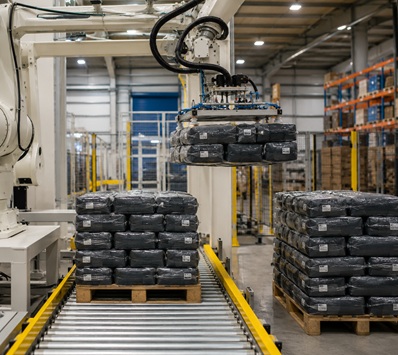
Palletising and Depalletising
Vacuum gripping heads handle cartons, containers, layers and mixed products at the start or end of automated production lines.
Why Vacuum Performance Matters
A lifting system must establish sufficient holding force quickly and maintain it throughout movement, acceleration, rotation and positioning.
Poor pump performance, excessive leakage, blocked filters or undersized pipework can increase cycle times or prevent the gripping system from reaching its required safe operating vacuum.
Important Selection Criteria
✓ Load weight and centre of gravity
✓ Horizontal, vertical or rotating lift
✓ Surface area, roughness and porosity
✓ Number, size and type of suction cups
✓ Leakage rate and required pumping speed
✓ Pick-up time, cycle rate and acceleration
✓ Pipework length, volume and pressure losses
✓ Safety factor, monitoring and reserve capacity
Vacuum Lifting Applications in More Detail
Glass, Windows and Glazed Units
Smooth glass surfaces normally allow suction cups to create a strong seal, making vacuum suitable for lifting sheets, insulated units, windows and architectural glazing.
The system must account for load orientation, cup condition, contamination, surface coatings, edge distance and the consequences of power or vacuum loss. Lifting equipment must be designed, tested and operated in accordance with the applicable safety requirements.
Sheet Metal and Fabrication
Vacuum lifting systems can move steel and aluminium sheets between storage, cutting, laser, press-brake and fabrication operations.
Oil, scale, protective film, curvature and thin-sheet flexing can affect sealing. The vacuum source must establish grip quickly while the cup arrangement distributes force without distorting the sheet.
Timber, Boards and Construction Panels
MDF, particleboard, plywood, doors and laminated panels are commonly moved by vacuum lifters or automated handling frames.
Porous boards and rough timber admit air continuously through the material or around the cups. These duties often need a higher-flow vacuum pump or side channel blower rather than a pump selected only for deep ultimate vacuum.
Robotic Pick-and-Place and Machine Loading
Robots use vacuum gripping heads to pick components, load machines, transfer products, perform assembly operations and sort finished goods.
Fast cycle rates require rapid evacuation of the cup and connecting volume. Acceleration, deceleration and sudden direction changes increase the effective force on the product and must be included in the sizing calculation.
Packaging, Cartons and Paper Products
Packaging machinery uses vacuum to separate blanks from stacks, erect cartons, position labels, move packs and feed products into subsequent operations.
Paper and board are naturally porous, while folds, perforations and surface coatings can vary between products. Adequate airflow and effective inlet filtration are therefore often more important than achieving a particularly deep vacuum.
Bags, Sacks and Flexible Products
Vacuum tube lifters and automated gripping heads can handle sacks of ingredients, powders, cement, animal feed and other flexible packaged products.
Because the load changes shape and the surface may leak, the system needs sufficient excess flow to maintain grip. Dust control and filters should be sized so they do not create excessive restriction as they load.
Plastics, Mouldings and Delicate Components
Vacuum grippers can remove moulded parts, move plastic sheets and handle painted, polished or delicate components without conventional jaws.
The gripping pressure must be controlled where thin or flexible products could deform. Cup material should also be compatible with the product surface and operating temperature.
Palletising, Depalletising and Layer Handling
Large-area vacuum grippers can handle individual cartons, complete product layers, containers and mixed packs during palletising and depalletising.
Variable product coverage creates changing leakage conditions. A regulated central vacuum supply, receiver and suitable controls can help maintain stable performance across multiple gripping zones.
Recommended Vacuum Pump Technologies
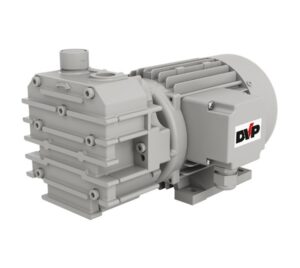
Dry Running Rotary Vane
A clean, compact and straightforward choice for suction cups handling smooth or lightly leaking products in intermittent or continuous machinery duties.
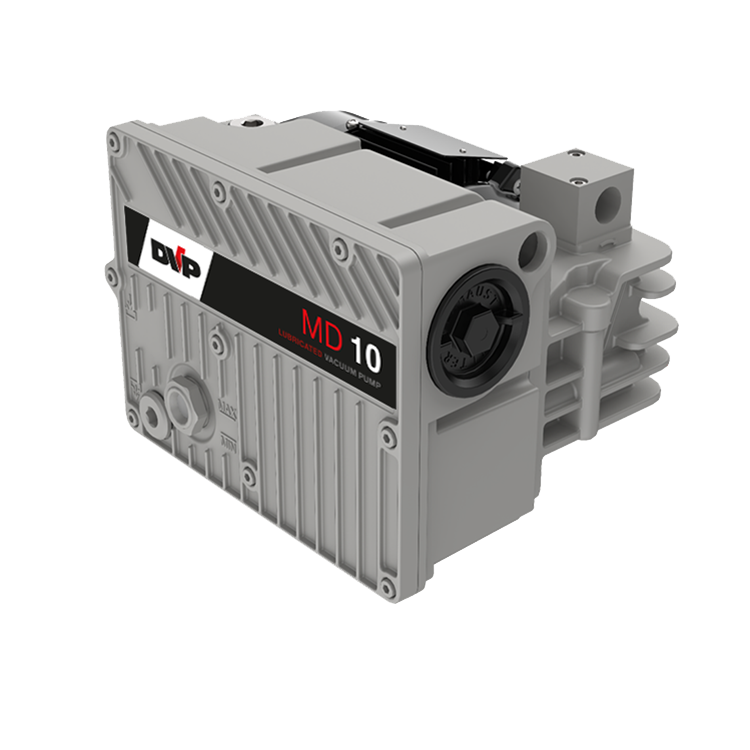
Oil Lubricated Rotary Vane
Provides dependable vacuum and robust continuous operation for larger lifting systems, central installations and duties requiring a stronger vacuum level.
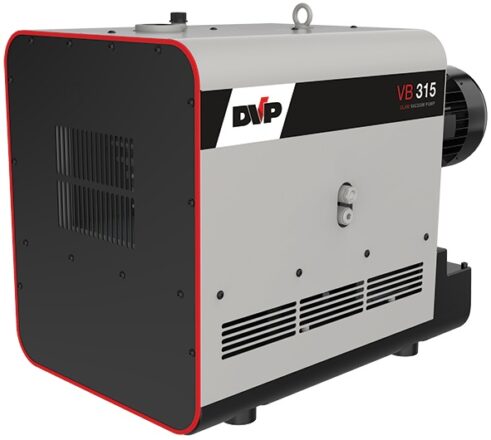
Dry Claw Vacuum Pumps
Efficient, oil-free pumping for automated handling, central vacuum networks and production systems requiring reliable continuous operation.

Side Channel Blowers
Ideal where porous materials, rough surfaces or open gripping areas create substantial leakage and the application needs high airflow at moderate vacuum.
Why Choose Vacuum Pumps UK?
Vacuum Pumps UK assesses the load, surface, leakage, required vacuum, flow rate, cycle time, pipework and operating environment before recommending a pump or blower for a lifting and handling application.
Official DVP Master Agent
Direct support from DVP Technology in Italy, with access to factory expertise, genuine spare parts and specialist industrial vacuum technology.
Application-Led Pump Selection
Practical advice based on the product weight, gripping area, porosity, leakage, movement, cycle time and required safety margin.
Replacement Pump Support
Send us the existing pump model, duty details and operating vacuum and we will help identify a suitable current replacement.
Service, Repairs and Maintenance
Workshop overhauls, preventative servicing, genuine parts and technical support help protect production and restore vacuum performance.
OEM Vacuum Lifting Equipment Support
Vacuum Pumps for Leading Vacuum Lifting Systems
Vacuum Pumps UK supplies replacement vacuum pumps, spare parts and technical support for a wide range of industrial vacuum lifting and handling equipment.
We do not manufacture complete lifting machines. Our expertise is in the vacuum source that allows the lifting equipment to grip and hold the load. We can help identify, service or replace the vacuum pump fitted to an existing manual lifter, tube lifter, crane-mounted system, robotic gripper or automated handling installation.
Support is available for vacuum lifting equipment manufactured by many established OEMs, as well as for bespoke machinery designed and built by specialist automation companies.
Replacement Pumps for Schmalz Vacuum Lifters
Schmalz is one of the best-known manufacturers of industrial vacuum lifting and gripping equipment. Its systems are widely used for handling timber boards, metal sheets, glass, cartons, sacks, drums and manufactured components.
On some Schmalz lifting systems, the installed vacuum pump may be a Becker-manufactured unit supplied under the Schmalz name as part of the original equipment.
Where this is the case, we can often identify the corresponding Becker pump, supply genuine service parts or recommend a suitable replacement based on the pump nameplate, performance and lifting duty.
Identifying the Correct Replacement Pump
The lifting-machine model alone may not provide enough information to identify the correct pump. The most useful details are:
✓ Photograph of the complete vacuum pump
✓ Photograph of the pump and motor nameplates
✓ Vacuum lifting machine manufacturer and model
✓ Normal operating vacuum and pumping speed
✓ Electrical supply and motor rating
✓ Products being lifted and typical operating cycle
Vacuum Lifting Pump FAQs
What type of vacuum pump is best for vacuum lifting?
The correct pump depends on the product surface and leakage. Dry rotary vane and oil-lubricated rotary vane pumps are widely used for smooth, reasonably airtight products. Dry claw pumps suit larger or central systems, while side channel blowers are often better for porous materials requiring high airflow.
How is the holding force of a vacuum lifter calculated?
Holding force is based on the pressure difference multiplied by the effective suction area. The practical design must also account for load orientation, acceleration, friction, leakage, cup distribution and an appropriate safety factor.
Why does a porous product need more vacuum pump capacity?
Air passes through porous materials and leaks around uneven surfaces continuously. The vacuum source must remove this incoming air fast enough to maintain the required pressure difference, so high pumping speed is often more important than a deep ultimate vacuum.
Why has a vacuum lifting system become slow to pick up a load?
Common causes include worn suction cups, leaking hoses, blocked filters, restricted valves, undersized pipework, pump wear or a change in the product surface. Measuring vacuum at the pump and at the gripping head can help locate the restriction or leakage.
Can one central vacuum system supply several lifting stations?
Yes. A central system can supply multiple machines or working stations when the simultaneous demand, leakage, receiver capacity, controls, redundancy and pipe network are correctly designed.
Can you replace a discontinued vacuum lifting pump?
Yes. Send us the existing pump model, pumping speed, normal operating vacuum, motor details, pipe connection and information about the products being lifted. We can assess the nearest current alternative.
Need Advice on a Vacuum Lifting or Handling Application?
Speak to our experts about a new vacuum pump, replacement pump, side channel blower, central vacuum system, technical problem or planned service requirement.