Laboratory & Medical Applications
Laboratory, Scientific & Medical Vacuum Pump Applications
Vacuum technology supports critical processes throughout scientific research, analytical laboratories, universities, pharmaceutical development, clinical diagnostics and medical equipment manufacturing.
Vacuum Pumps UK supplies high-vacuum and laboratory vacuum pumps for new installations, replacement duties and OEM equipment. We help customers select the correct pumping technology according to the required pressure, pumping speed, gas load, chemical compatibility, cleanliness and operating cycle.
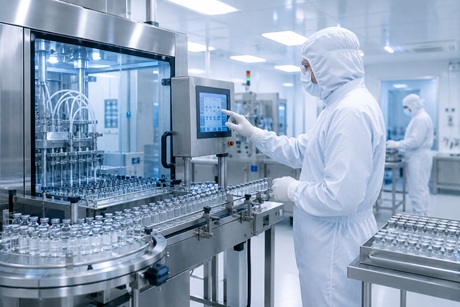
Reliable Vacuum for Research, Analysis and Medical Technology
Laboratory and medical vacuum applications can demand anything from controlled rough vacuum to high-vacuum conditions. Stable pressure, low contamination, quiet operation and dependable performance may directly affect test results, sample quality, instrument availability and process repeatability.
The correct pump cannot be selected by flow rate alone. The ultimate pressure, chamber volume, required evacuation time, vapour load, process gases, inlet temperature, cleanliness requirements and intended duty cycle must all be considered.
As the Official DVP Technology Master Agent for the UK and Ireland, Vacuum Pumps UK provides application advice, new pumps, genuine spare parts, servicing and complete vacuum solutions for laboratories, universities, scientific equipment manufacturers, pharmaceutical facilities and medical technology companies.
Laboratory & Medical Vacuum Applications
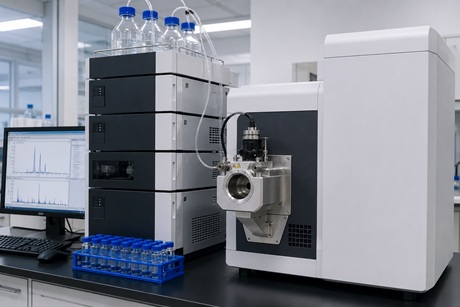
Analytical Instruments
Reliable backing and high-vacuum pumps support mass spectrometers, gas analysers, leak detectors and other sensitive analytical instruments.
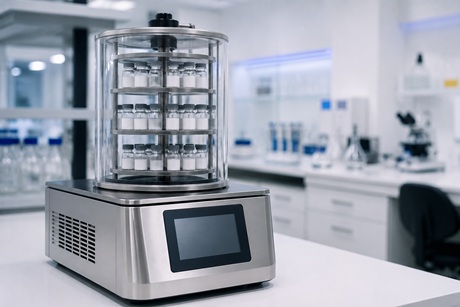
Freeze Drying & Lyophilisation
Deep and stable vacuum supports moisture removal from pharmaceutical, biological, research and diagnostic samples.
Evaporation, Filtration & Degassing
Vacuum is used for rotary evaporation, filtration, solvent recovery, degassing and sample preparation across research laboratories.
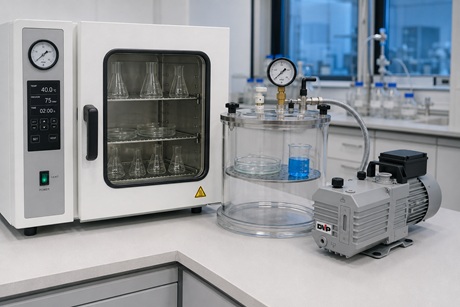
Vacuum Ovens & Chambers
Vacuum ovens and test chambers rely on controlled evacuation for drying, curing, conditioning and materials testing.
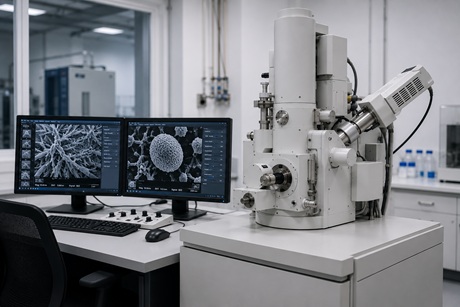
Electron Microscopy
Electron microscopes require clean, stable vacuum conditions to protect the electron path and support accurate high-resolution imaging.
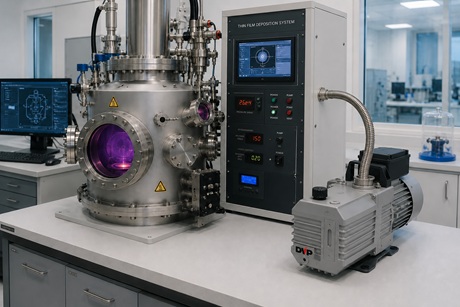
Coating & Thin-Film Research
High-vacuum pumps support experimental coating, evaporation, sputtering and thin-film deposition systems.
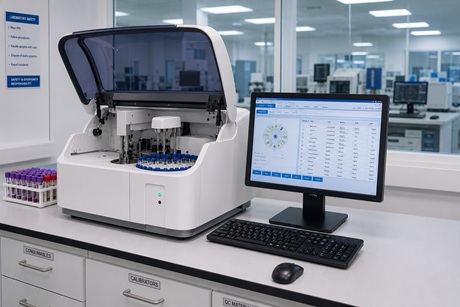
Clinical Diagnostics
Vacuum pumps are integrated into diagnostic analysers, sample handling equipment and specialist medical laboratory instruments.
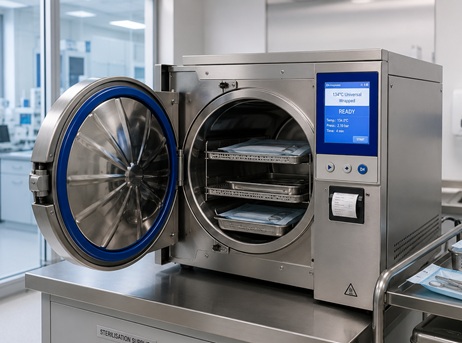
Sterilisation & Medical Equipment
Vacuum assists air removal, drying and process control in sterilisation equipment and selected medical technology applications.
Why Vacuum Performance Matters
An unstable or contaminated vacuum can affect evacuation time, instrument sensitivity, sample integrity and the repeatability of laboratory results.
Correctly matching the pump to the application helps protect valuable equipment, reduce unplanned downtime and maintain consistent process conditions.
Important Selection Criteria
✓ Required operating and ultimate pressure
✓ Chamber volume and evacuation time
✓ Gas, solvent and chemical compatibility
✓ Moisture and condensable vapour load
✓ Cleanliness and oil-free requirements
✓ Continuous or intermittent duty cycle
✓ Noise, vibration and installation environment
Vacuum Applications in More Detail
Analytical and Scientific Instruments
Mass spectrometers, residual gas analysers, helium leak detectors and related instruments often combine a high-vacuum stage with a mechanical backing pump.
Low vibration, dependable ultimate pressure and protection against contamination are particularly important where pump condition can influence instrument sensitivity and availability.
Freeze Drying and Lyophilisation
Freeze dryers remove water by sublimation under vacuum. The pump must manage low operating pressures while the condenser captures the bulk of the released water vapour.
Correct pump sizing and effective vapour protection are essential because moisture entering an oil-sealed pump can contaminate the oil and reduce attainable vacuum.
Evaporation, Filtration and Degassing
Rotary evaporators, vacuum filtration systems and degassing processes frequently expose the pump to solvents, moisture or condensable vapours.
Chemical compatibility, pressure control and suitable inlet protection should be assessed carefully. A dry chemical-resistant pump may be preferable for aggressive vapours, while deeper vacuum duties may require an oil-sealed pump with appropriate traps and operating procedures.
Vacuum Ovens, Chambers and Test Systems
Vacuum ovens and chambers are used for drying, curing, environmental testing, materials research and component conditioning.
Pump selection depends on chamber size, desired pump-down time, process temperature and the quantity of gas or vapour released by the materials inside the chamber.
Electron Microscopy and Surface Analysis
Scanning and transmission electron microscopes require controlled vacuum conditions to minimise interference with the electron beam.
The backing pump must provide reliable support to the high-vacuum stage while limiting vibration, noise and contamination around sensitive instrumentation.
Vacuum Coating and Thin-Film Research
Laboratory-scale evaporation, sputtering and deposition systems require repeatable pump-down and stable high-vacuum conditions.
System performance may depend on chamber cleanliness, outgassing, process gas control and the correct combination of roughing, backing and high-vacuum pumps.
Clinical Diagnostics and Medical Laboratories
Diagnostic instruments may use vacuum for sample movement, aspiration, fluid handling, analysis and instrument operation.
Replacement pumps must be assessed against the equipment manufacturer’s required flow, pressure, materials, electrical supply, duty cycle and any applicable validation or regulatory requirements.
Sterilisation and Medical Equipment
Sterilisers and autoclaves use vacuum to remove air before sterilisation and to assist drying at the end of the cycle.
These duties may involve hot, wet gas loads and therefore require careful consideration of vapour handling, corrosion resistance and service intervals. Patient-connected medical vacuum systems require specialist design and compliance assessment beyond normal industrial pump selection.
Recommended Vacuum Pump Technologies

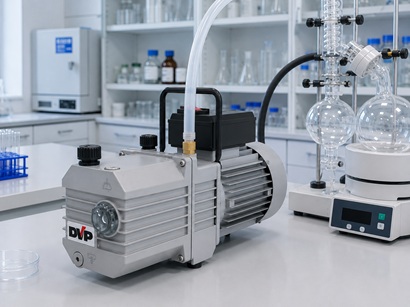
High-Vacuum Rotary Vane
Designed for laboratory and scientific duties requiring deeper ultimate pressure, including vacuum chambers, analytical instruments, freeze dryers and high-vacuum backing applications.
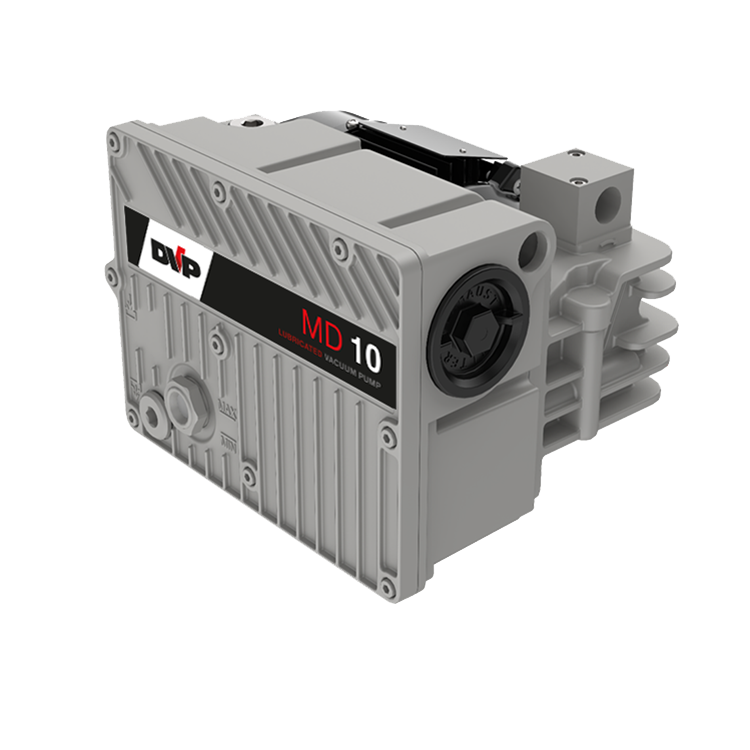
Oil Lubricated Rotary Vane
A robust solution for demanding duties requiring good ultimate vacuum, reliable continuous operation and effective vapour handling through gas ballast.
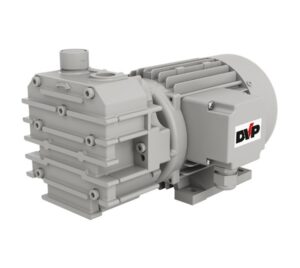
Dry Running Rotary Vane
Provides oil-free operation for clean laboratory duties where moderate vacuum, compact installation and straightforward maintenance are required.

Complete Vacuum Systems
Engineered packages can combine pumps, receivers, controls, valves, filters, traps and standby capacity for shared laboratory or OEM installations.
Protecting Laboratory Vacuum Pumps
Many premature vacuum pump failures are caused by contamination, unsuitable operating conditions or incorrect pump selection rather than normal mechanical wear. A few practical measures can significantly improve reliability and service life.
Use Suitable Inlet Protection
Cold traps, knock-out vessels, inlet filters and condensers can prevent solvents, moisture, particles and process material from entering the pump.
Manage Condensable Vapours
Where appropriate, use the gas ballast during wet duties and allow the pump to purge after the process to help remove residual vapours.
Monitor Pump Oil
Cloudy, darkened or contaminated oil can reduce ultimate vacuum, increase operating temperature and accelerate internal wear.
Check the Complete System
Leaks, damaged hoses, worn seals, restricted exhaust filters and excessive outgassing can all appear to be a pump performance problem.
Maintain Cooling and Ventilation
Keep cooling fans and ventilation paths clear, and avoid enclosing the pump where heat cannot escape.
Plan Preventative Maintenance
Service intervals should reflect operating hours, vapour exposure, contamination risk and the importance of the connected equipment.
Why Choose Vacuum Pumps UK?
Vacuum Pumps UK provides more than pump supply. We assess the required pressure, pumping speed, process conditions, chemical compatibility, contamination risk and operating cycle before recommending a suitable laboratory or high-vacuum solution.
Official DVP Master Agent
Direct support from DVP Technology in Italy, with access to factory expertise, genuine spare parts and specialist vacuum pump technology.
Application-Led Pump Selection
Practical advice based on the target pressure, pump-down time, vapour load, gas compatibility, cleanliness requirements and duty cycle.
Replacement Pump Support
Send us the existing pump model, instrument details and operating conditions and we will help identify the nearest suitable replacement.
Service, Repairs and Maintenance
Workshop overhauls, preventative servicing, genuine replacement parts and technical support help restore performance and extend pump life.
Laboratory Vacuum Pump FAQs
What type of vacuum pump is best for laboratory use?
There is no single best laboratory pump. The correct choice depends on the required pressure, pumping speed, process gases, vapour load, chemical compatibility, contamination limits and duty cycle. High-vacuum analytical duties may require a two-stage rotary vane backing pump, while solvent-heavy processes may be better suited to chemically resistant dry technology.
Why is my laboratory vacuum pump no longer reaching its normal vacuum?
Common causes include leaks in hoses or seals, contaminated oil, blocked filters, excessive vapour load, worn internal components or outgassing from the chamber. Testing the pump separately from the system can help determine whether the fault is within the pump or elsewhere in the installation.
How can solvents and moisture be kept out of a vacuum pump?
Use correctly sized cold traps, condensers or knock-out vessels between the process and pump. For suitable oil-sealed pumps, the gas ballast can help the pump discharge condensable vapours before they contaminate the oil.
Can you replace a discontinued laboratory vacuum pump?
Yes. Provide the existing model, required ultimate pressure, nominal pumping speed, inlet connection, electrical supply, process details and available installation space. We can then assess the nearest current alternative.
Do laboratory vacuum pumps require regular servicing?
Yes. Oil condition, filters, seals, cooling and attainable pressure should be monitored. Service frequency depends on running hours and the process gas load; pumps exposed to solvents, moisture or contaminants may require substantially more frequent attention.
Need Advice on a Laboratory or Medical Vacuum Application?
Speak to our experts about a new high-vacuum pump, replacement pump, laboratory vacuum system, technical problem or planned service requirement.